Pigeon Control Phoenix | Health & Safety Guide
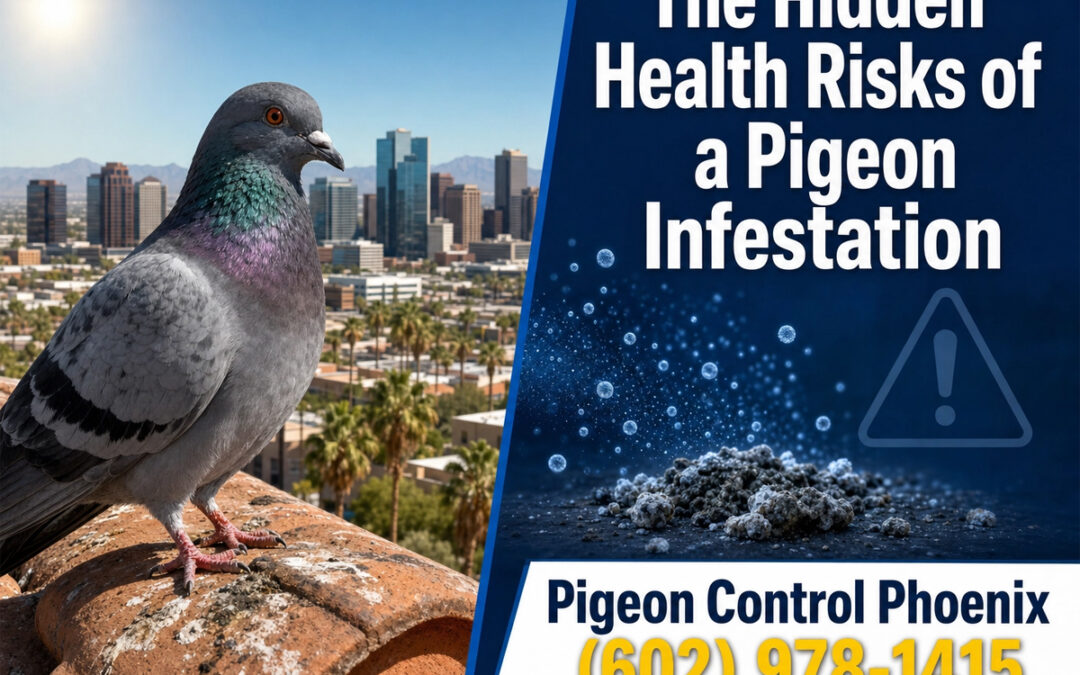
The Hidden Health Risks of a Pigeon Infestation on Your Phoenix Home or Business
What you don’t know about pigeon droppings, nesting debris, and airborne disease could be putting your family, employees, and customers at serious risk right now.
If you have pigeons roosting on your roof, nesting under your solar panels, or congregating around your commercial property, the problem is bigger than a messy sidewalk. A pigeon infestation on a Phoenix home or business is a genuine public health concern — one that Maricopa County’s own environmental health authorities take seriously. Don’t ignore the health risks of a Pigeon Infestation!
The main health concerns come from droppings, nesting debris, feathers, mites, dead birds, and the airborne dust that forms when contaminated material gets disturbed. In Metropolitan Phoenix, our dry desert climate makes this even more dangerous. Droppings dry out fast, crumble into fine particles, and can become airborne with the slightest breeze — or a broom stroke.
At Pigeon Control Phoenix, we have spent years helping homeowners, property managers, restaurants, warehouses, and commercial facilities across the Valley deal with these problems safely and permanently. This guide covers everything you need to know about the health risks — and what to do about them.
At a Glance: Top Health Risks of a Pigeon Infestation
- Respiratory illness from airborne dried droppings
- Histoplasmosis — a serious fungal lung infection
- Psittacosis — a bacterial infection causing pneumonia
- Cryptococcosis — a fungal disease dangerous to immunocompromised individuals
- Salmonella contamination of walkways, patios, and food-service areas
- Slip-and-fall hazards and business liability exposure
- Bird mites, fleas, ticks, and secondary pest infestations
- Odors, allergens, and compromised indoor air quality near HVAC systems
- Dead birds and nesting debris attracting flies, rodents, and beetles
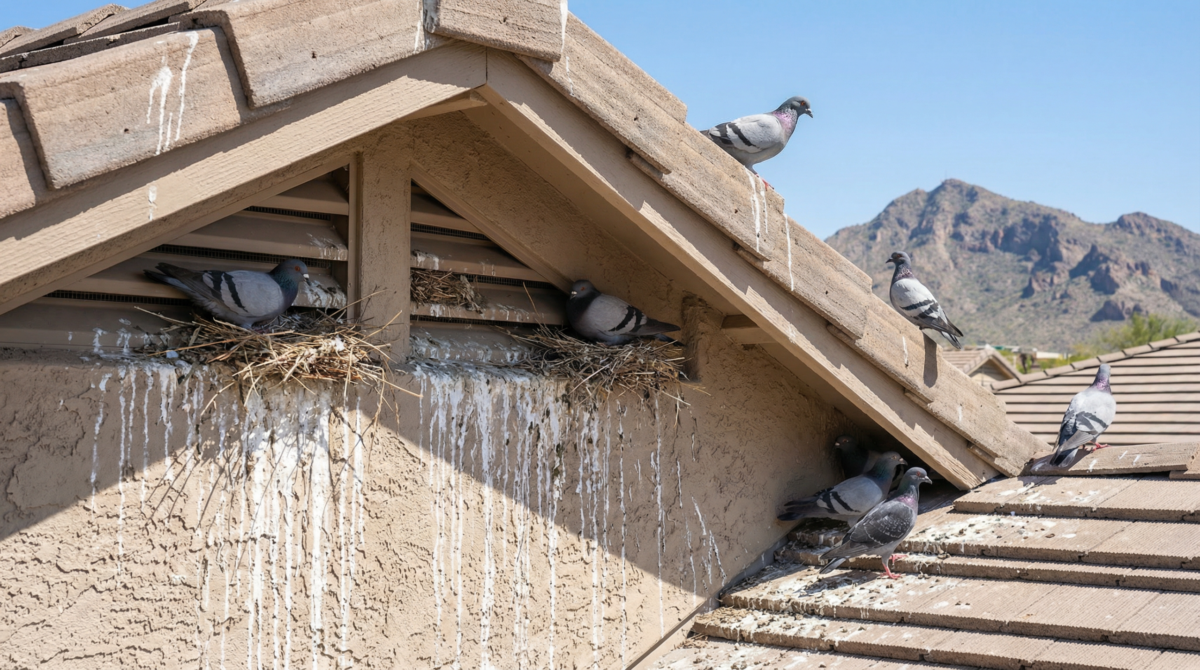 Why Phoenix Makes Pigeon Health Risks Worse
Most cities deal with seasonal pigeon problems. Phoenix is different. Our year-round warmth means pigeons breed continuously — up to six times per year, compared to just two or three times in cooler climates. That means faster population growth, more nesting sites, and a constant accumulation of droppings and debris on your property.
Our dry desert air also accelerates the drying of droppings. What might stay moist and contained for days in a humid city turns to crumbling, dusty powder within hours here. That powder can carry fungal spores and bacteria. The moment someone sweeps, pressure washes, or even walks through a contaminated area, those particles go airborne.
If you want to understand just how persistent this problem is in our region, read our detailed breakdown of why Phoenix’s endless summer creates year-round pigeon problems. The biology of the problem directly shapes the health risk — and it is something every Phoenix property owner needs to understand.
Respiratory Exposure from Dried Droppings
The most immediate and widespread health risk from a pigeon infestation is respiratory exposure. In Phoenix’s dry climate, pigeon droppings can dry out within hours. When people sweep, pressure wash, scrape, or disturb nesting areas, particles become airborne almost instantly.
This is a concern around roofs, parapet walls, attics, warehouses, loading docks, signs, and solar panels. It affects not just the person doing the cleaning, but anyone nearby — including children playing in the yard, employees working in the area, or customers walking past a contaminated entryway.
The Critical Safety Warning for Phoenix Property Owners
Do not dry sweep, blow, or vacuum pigeon droppings without proper precautions. Dried droppings must be wetted down first, then disinfected, then removed with PPE, then bagged properly — followed by exclusion work so birds cannot return. Our professional bird poop clean-up service follows all safety protocols to protect your health throughout the process.
 Diseases Linked to Pigeon Droppings and Nesting
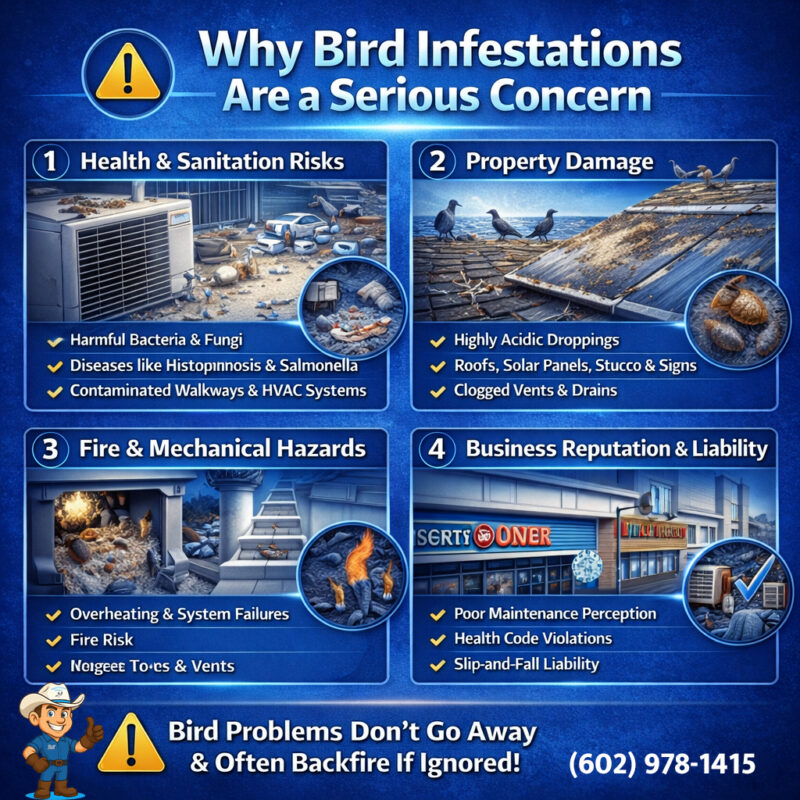
Several serious diseases are directly associated with pigeon droppings and nesting material. Understanding each one helps you appreciate why professional remediation is not optional — it is essential. Our in-depth article on pigeon dropping health risks in Phoenix covers these in greater detail, but here is what every property owner needs to know.
Histoplasmosis
Histoplasmosis is a lung infection caused by breathing in fungal spores. The CDC confirms the fungus can be found in soil and environments contaminated with bird or bat droppings. The risk increases significantly when contaminated material is disturbed during cleanup, construction, landscaping, or similar activities.
Symptoms can range from mild flu-like illness to severe, life-threatening respiratory distress. Healthy adults may recover without treatment, but children, the elderly, and people with compromised immune systems face serious complications. In Phoenix, where droppings dry and crumble rapidly, the exposure risk is higher than in most other cities.
Psittacosis
Psittacosis is a bacterial infection associated with birds. Health authorities confirm that people most commonly become infected by breathing dust containing dried bird secretions or droppings. Exposure can happen from infected birds or their droppings — and you do not need to handle a bird directly to be at risk.
It can cause respiratory illness and, in some cases, severe pneumonia. Maricopa County’s own health department lists psittacosis as a recognized concern in our region. If you have noticed pigeons congregating near your HVAC vents or air intakes, the risk of indoor exposure is real.
Cryptococcosis
This fungal disease is often discussed alongside large accumulations of bird droppings, especially in areas where droppings have built up over time. It is generally a bigger concern for people with weakened immune systems — including those undergoing cancer treatment, living with HIV/AIDS, or taking immunosuppressant medications. However, heavy contamination on any property should be treated seriously regardless of who lives or works there.
Salmonella and Sanitation Contamination
Pigeon droppings can carry and spread Salmonella bacteria. This is a particular concern for food-service businesses, outdoor dining areas, and any property where people prepare or consume food near contaminated surfaces. Droppings on walkways, patios, HVAC areas, rooftop equipment, loading docks, and entryways create a direct sanitation hazard that can affect employees, customers, and the public.
Pigeon-Related Disease Quick Reference
| Disease | Type | How You Get It | Who Is Most at Risk | Severity |
|---|---|---|---|---|
| Histoplasmosis | Fungal | Inhaling airborne spores from disturbed droppings | Everyone; severe in immunocompromised | Moderate–Severe |
| Psittacosis | Bacterial | Breathing dust from dried bird secretions or droppings | Everyone; elderly at higher risk | Moderate–Severe |
| Cryptococcosis | Fungal | Inhaling spores from accumulated droppings | Primarily immunocompromised individuals | Mild–Severe |
| Salmonella | Bacterial | Contact with contaminated surfaces or food prep areas | Everyone; children and elderly most vulnerable | Moderate |
Slip-and-Fall Hazards and Business Liability in Phoenix
Fresh pigeon droppings on sidewalks, stairs, patios, parking structures, and commercial entry areas can become dangerously slick. For businesses, this is not just a nuisance — it is a real liability concern. Under Arizona premises liability law, property owners have a duty to maintain safe conditions for visitors and employees.
A customer who slips on a bird-dropping-covered walkway outside your restaurant, retail store, or office building could have grounds for a personal injury claim. The cost of a single lawsuit can far exceed the cost of professional bird control services.
Our commercial bird control services are designed specifically for businesses that need to protect both their customers and their bottom line. From loading docks and parking structures to restaurant patios and retail storefronts, we provide solutions that keep your property clean, safe, and compliant.
Parasites, Secondary Pests, and the Cascade Effect
Pigeon nests are not just homes for birds. They are warm, sheltered breeding grounds for a wide range of secondary pests. A single active nest can harbor bird mites, fleas, ticks, beetles, flies, and other insects that feed on the birds and their nesting material.
Here is where it gets worse: once the birds are removed or excluded, those hungry parasites do not disappear. They migrate into nearby living spaces and work areas looking for a new host. Homeowners have reported sudden, unexplained biting insect infestations after pigeons were removed from their attic or roof — only to discover the source was bird mites from the abandoned nest.
Dead Birds, Eggs, and Nesting Debris
Dead pigeons, unhatched eggs, and old nest material create a secondary problem of their own. This organic material attracts flies, maggots, beetles, ants, and rodents. What starts as a bird problem can quickly cascade into a broader pest and sanitation issue that is far more expensive and complex to resolve.
That is why professional bird nest removal is a critical part of any complete pigeon control solution. Simply scaring birds away or installing deterrents without removing the existing nest material leaves the secondary pest problem fully intact.
Odor, Allergens, and Indoor Air Quality Threats
Heavy nesting under solar panels, in attic vents, roof returns, signs, or mechanical areas creates more than an odor problem. The combination of feather dust, allergens, dried droppings, and decomposing nest material can significantly affect the air quality inside your home or building.
This becomes a serious health concern when nesting activity occurs near HVAC intakes or ventilation openings. Contaminated air can be drawn directly into your building’s air system and distributed throughout every room. Occupants may experience persistent respiratory irritation, allergy-like symptoms, or unexplained odors without realizing the source is on the roof.
If you suspect pigeons are nesting near your air system, our specialized HVAC pigeon removal and exclusion service addresses the problem at the source — safely removing nesting material, sanitizing the area, and installing exclusion barriers to prevent re-entry.
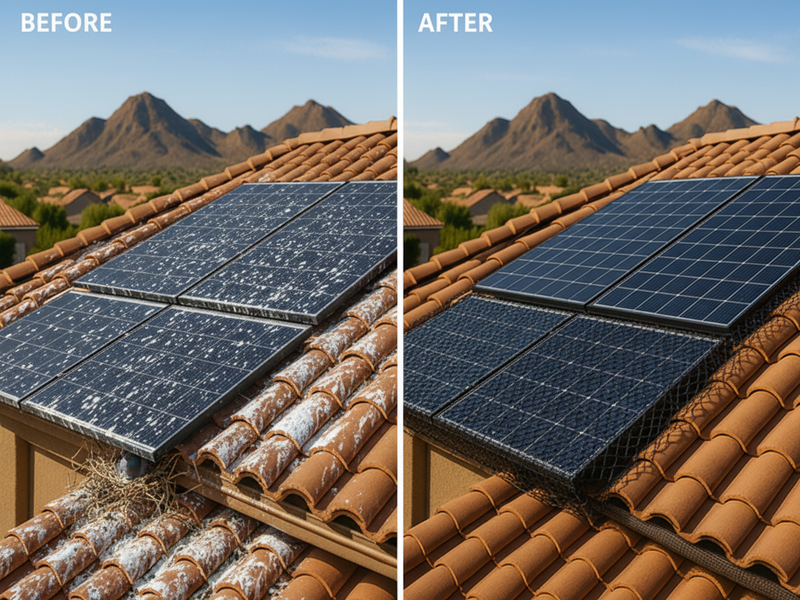
Solar panels can contribute to the Health Risks of a Pigeon Infestation
Solar Panels: A Hidden Nesting Hotspot in Phoenix
Phoenix has one of the highest rates of residential solar panel adoption in the country. Unfortunately, the gap between solar panels and the roof surface creates a perfect protected nesting environment for pigeons — shaded, sheltered, and elevated. Nesting under solar panels is one of the most common pigeon problems we encounter across the Valley.
The health risks are compounded here because the droppings and nesting debris accumulate in a confined space directly above your living area. Feather dust and allergens can enter through roof vents. The weight and acidity of accumulated droppings can also damage roofing materials and void panel warranties.
Our solar panel pigeon proofing service uses a non-penetrating mesh system that blocks access without voiding your warranty or affecting panel performance. For more detail on this specific problem, read our guide on pigeons nesting under solar panels.
Why are Pigeons nesting under Solar Panels
What Maricopa County Says About the Health Risks of a Pigeon Infestation
Maricopa County’s Environmental Services Department has the authority to respond to complaints regarding birds that have become a public health nuisance. The County’s official guidance is clear: property owners are responsible for preventing conditions on their property that create a public health hazard.
The use of poisons or shooting is strongly discouraged. Arizona is home to one of the largest protected-bird programs in the country, and improper control methods can result in legal consequences. Maricopa County recommends consulting with a licensed pest or bird control company to implement proper, humane control measures.
As a licensed and experienced pigeon control company in Arizona, Pigeon Control Phoenix operates in full compliance with all state and county regulations. We use only humane, proven methods that are safe for your family, your property, and the surrounding environment.
 What Professional Pigeon Control Looks Like
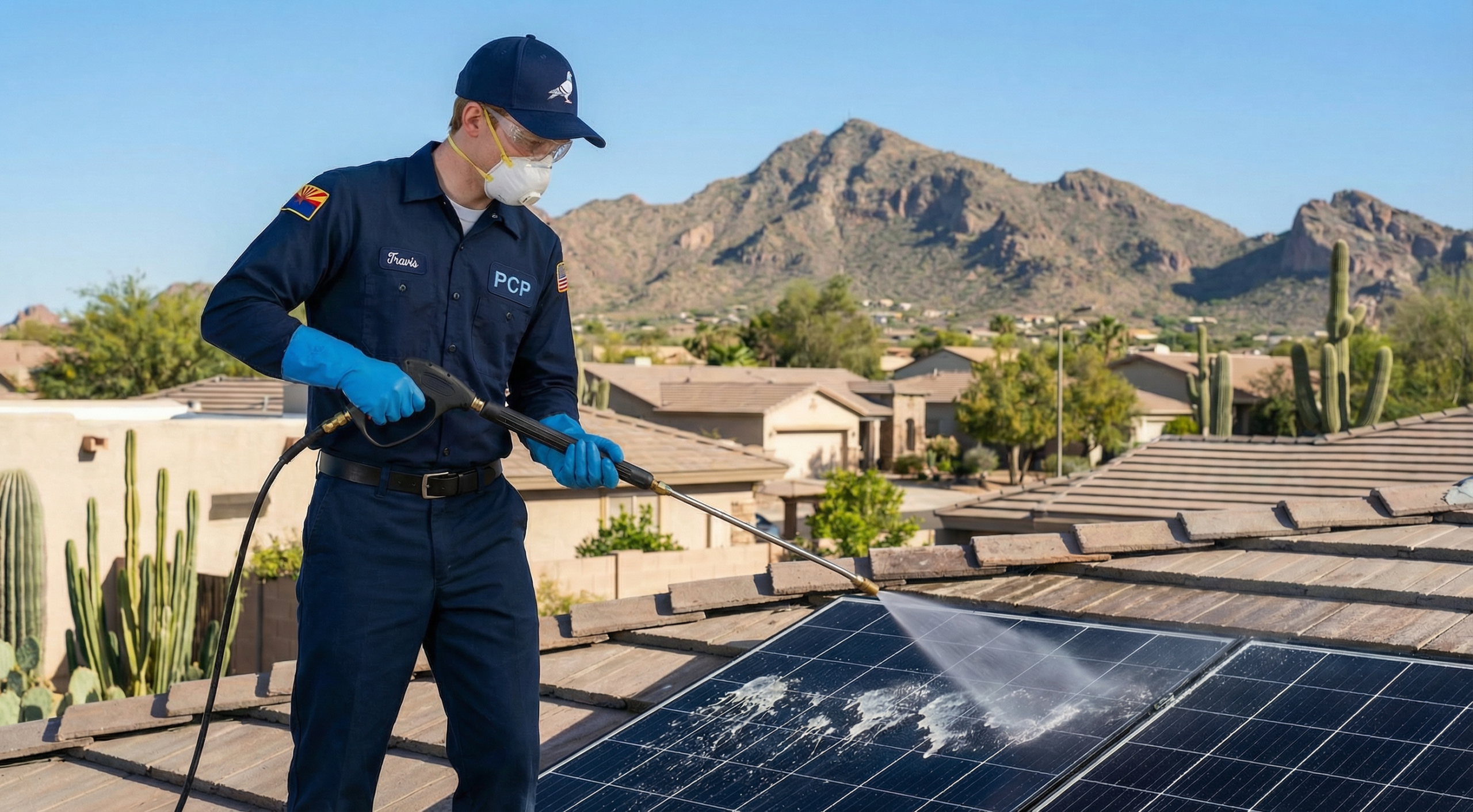
Many property owners try to handle pigeon problems themselves — and most end up making the situation worse, or simply not solving it. Pigeons are highly adaptable. They return to the same roosting and nesting sites year after year. Without a complete, integrated approach, the problem always comes back.
Here is what a professional, comprehensive pigeon control service from Pigeon Control Phoenix includes:
Thorough Property Inspection
We identify all active roosting and nesting sites, assess the extent of contamination, and evaluate structural vulnerabilities.
Safe Droppings Removal
Droppings are wetted, disinfected, and removed by trained technicians using full PPE — never dry swept or blown.
Nest and Debris Removal
All nesting material, eggs, and dead birds are removed and disposed of properly to eliminate secondary pest attraction.
Exclusion and Deterrents
We install bird netting, spikes, wire systems, and solar panel mesh to physically prevent re-entry and re-roosting.
To understand the full scope of what we offer, visit our professional pigeon removal service page or learn about our bird netting solutions for long-term exclusion. If you are not sure which service is right for your property, our guide on how to choose the right pigeon control service in Phoenix is a great starting point.

Let us help you avoid the Health Risks of a Pigeon Infestation
Why Phoenix Property Owners Trust Pigeon Control Phoenix
Local
We live and work in Metropolitan Phoenix. We know the local climate, the local bird behavior, and the local regulations.
Licensed
Fully licensed and insured. We operate in compliance with Maricopa County and Arizona state requirements.
Proven
Years of experience protecting homes, businesses, warehouses, restaurants, and commercial properties across the Valley.
FAQ’s – Health Risks of a Pigeon Infestation
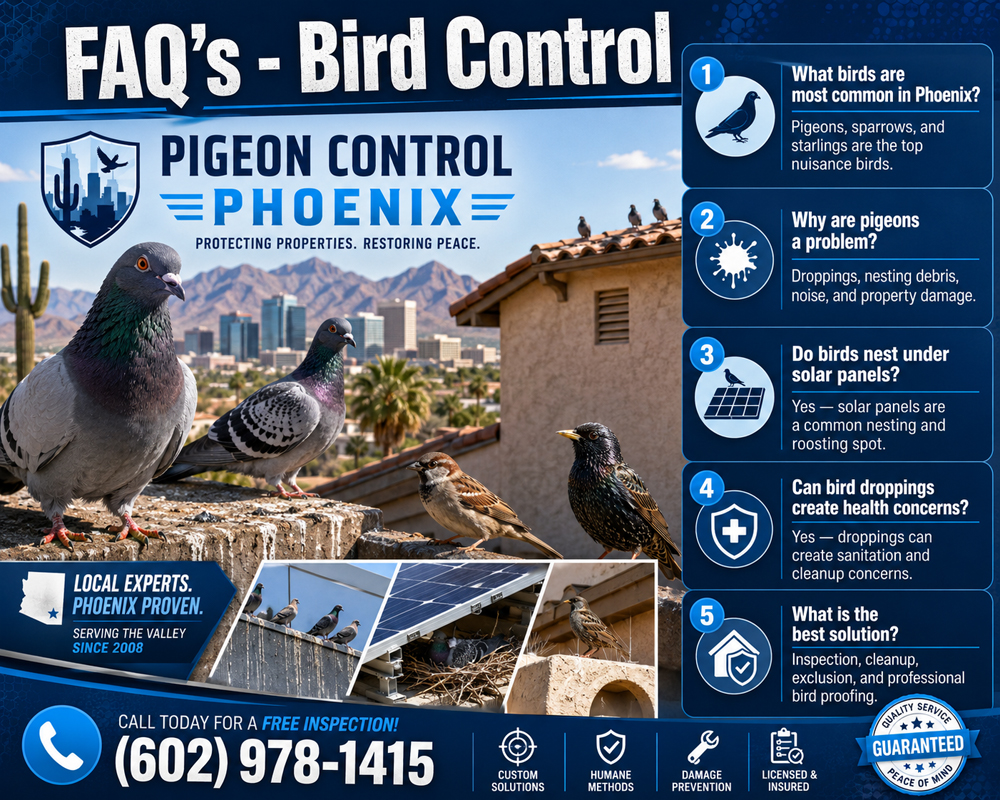
Frequently Asked Questions About Health Risks of a Pigeon Infestation
Serving All of Metropolitan Phoenix and Beyond
Pigeon Control Phoenix serves residential and commercial customers throughout the greater Phoenix metro area and across Arizona. Whether you are in the heart of the city or in the surrounding communities, our team is ready to help.
We serve Phoenix, Scottsdale, Mesa, Chandler, Gilbert, Glendale, Peoria, Tempe, Surprise, Goodyear, Avondale, Queen Creek, and many more communities across Maricopa County and the state of Arizona.
 Don’t Wait Until the Problem Gets Worse
The longer a pigeon infestation goes unaddressed, the greater the Health Risks of a Pigeon Infestation and the higher the remediation cost. Pigeon Control Phoenix is here to help — with honest assessments, transparent pricing, and solutions that actually work.
We offer:
✓ Free, no-obligation property inspections
✓ Hassle-free quotes with transparent pricing
✓ Expert second opinions on existing bids
✓ Free evaluations for homes and businesses
✓ Humane, licensed, and locally trusted service
Call (602) 978-1415 Today
Request Your Free Inspection Online
Serving Metropolitan Phoenix, Maricopa County, and all of Arizona