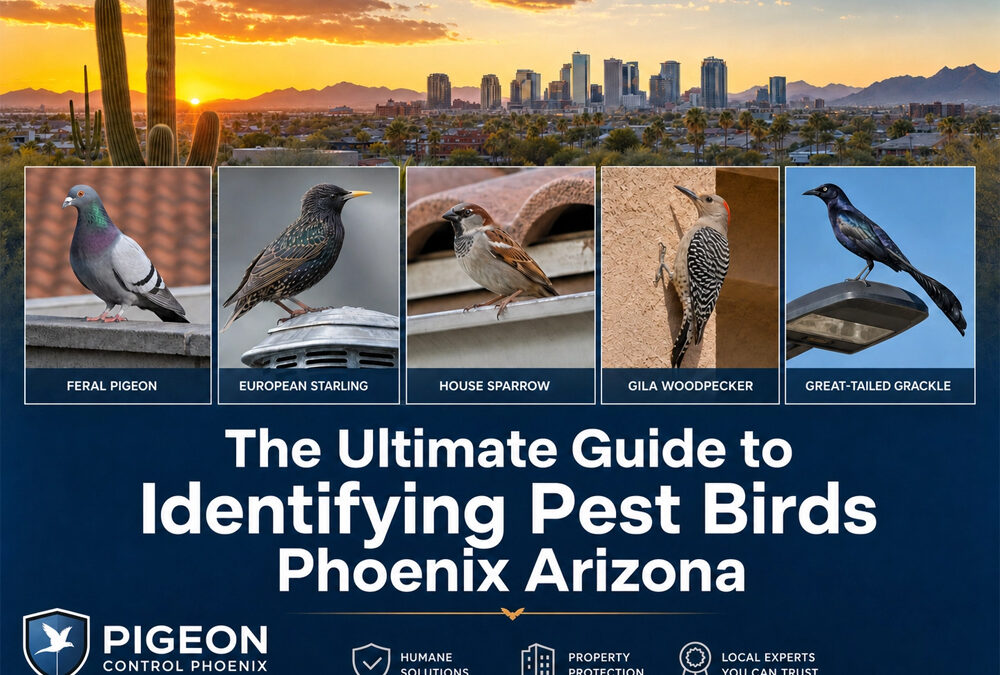
The Ultimate Guide to Identifying Pest Birds Phoenix Arizona
Are feral birds driving you crazy and damaging your property? Discover why Pigeon Control Phoenix is the trusted, local solution for homes and businesses across the Valley of the Sun.
Living in the beautiful Valley of the Sun comes with many incredible benefits. Unfortunately, our warm desert climate also creates the perfect environment for an endless, year-round pigeon breeding season. If you are a property owner dealing with a feral bird infestation, you already know how frustrating and messy the situation can become. The constant cooing, the unsightly droppings, and the damage to your roof or solar panels can quickly turn your dream property into a nightmare.
You do not have to fight this battle alone. As a family-owned and locally operated business with over 30 years of experience, we understand exactly what you are going through. Three generations of our family have dedicated themselves to protecting Arizona homes and businesses from destructive avian pests. We know that cookie-cutter solutions simply do not work in our unique environment. That is why we tailor our safe, highly effective, and affordable methods to meet the specific needs of your property.

Arizona’s Bird Control Experts
Why Trust Us With Your Property?
When it comes to protecting your most valuable asset, experience and reputation matter. Pigeon Control Phoenix has been voted Best Bird Control Service in Arizona by home and business owners for 12 straight years. We do not take that honor lightly. It reflects our unwavering commitment to providing honest assessments, utilizing top-tier materials, and delivering permanent solutions.
- Three Generations of Expertise: Deep local knowledge of desert bird behavior.
- Family-Owned & Operated: We treat your property with the same care as our own.
- Safe & Humane Methods: Protecting your health without harming the environment.
- Affordable Solutions: Custom quotes ensure you only pay for exactly what you need.
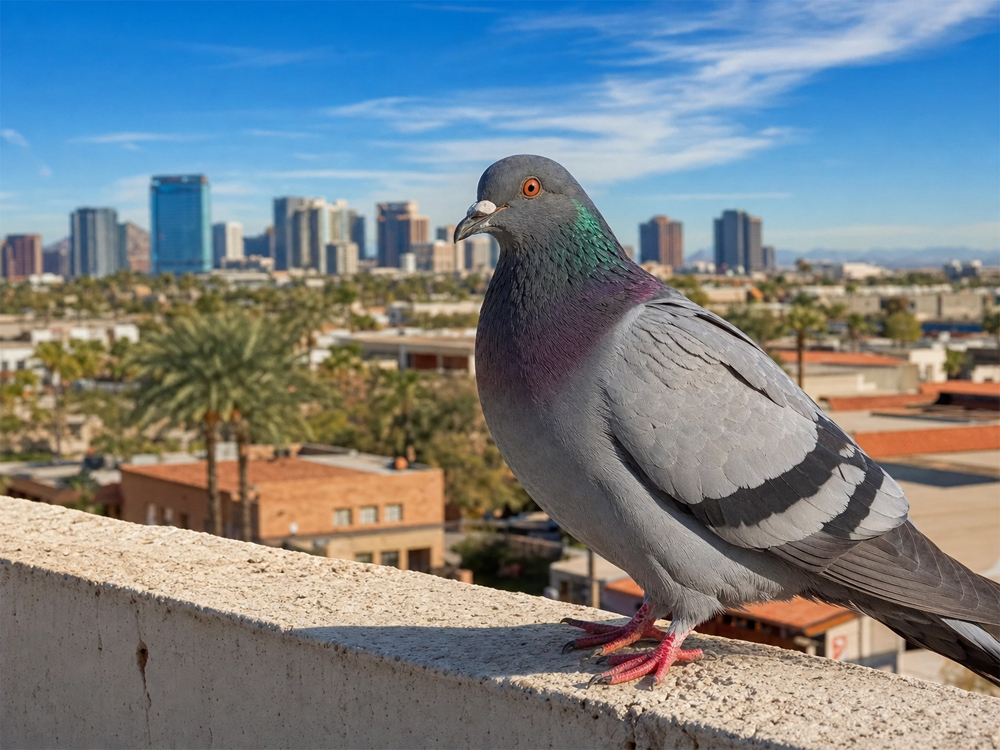
Feral Pigeons in Phoenix Arizona
Feral Pigeons: The Number One Urban Pest Bird
Feral pigeons (Columbia Livia) are arguably the most common and destructive pest birds in the Phoenix area. Descendants of domesticated rock doves, these birds are perfectly adapted to urban environments and can breed year-round in our mild climate. You can identify them by their blue-gray plumage, iridescent feathers on the neck, and distinct cooing sounds. They are drawn to homes and businesses because of the abundance of food scraps, water sources, and man-made structures that mimic their natural cliff-dwelling habitats, such as building ledges, eaves, and the shaded areas underneath solar panels.
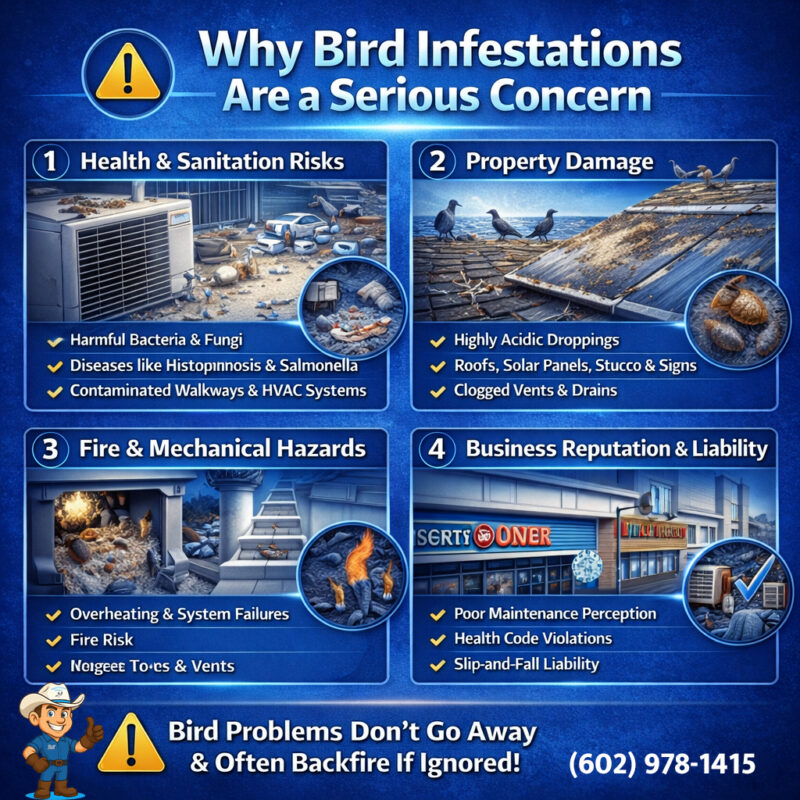
Pigeons are considered pests primarily due to the massive amount of highly acidic droppings they produce—up to 50 times a day per bird. This waste can rapidly corrode roofing materials, metal flashing, HVAC units, and automotive paint. When pigeons nest under solar panels, their debris can reduce energy efficiency, cause fire hazards, and even void manufacturer warranties. Furthermore, pigeon droppings harbor dangerous transmittable diseases like histoplasmosis and salmonella, posing serious respiratory risks when dried feces become airborne and enter ventilation systems.
Preventing pigeon infestations requires eliminating attractants by securing trash cans, removing standing water, and never feeding them. To get rid of established flocks, professional exclusion methods are essential. Ineffective DIY methods like plastic owls or reflective tape fail quickly in the Arizona sun. Instead, we utilize commercial-grade, UV-resistant polyethylene netting, stainless steel bird spikes, and specialized solar panel exclusion screening to physically prevent them from landing or nesting on your property.
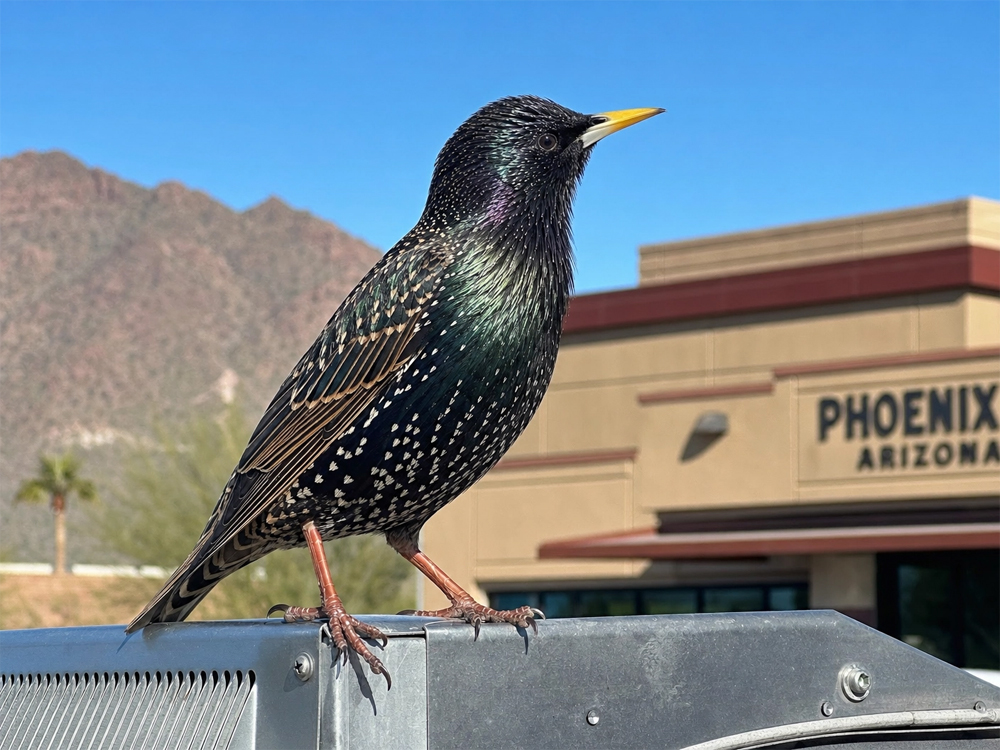
European Starlings in Phoenix Arizona
European Starlings: Aggressive and Noisy Invaders
European starlings are medium-sized, stocky birds with short tails and long, slender beaks. During the breeding season, their beaks turn yellow, and their black feathers display a glossy, iridescent sheen of purple and green. In the winter, their plumage becomes speckled with white spots. Introduced to North America in the 1890s, they have thrived in urban and agricultural settings alike. They are highly attracted to properties that offer easily accessible food, such as livestock feed, pet food left outside, and fruit-bearing trees, as well as small cavities in buildings for nesting.
These birds are considered a major nuisance because of their aggressive nature and tendency to form massive, noisy flocks called murmurations. They aggressively outcompete native bird species for cavity nesting sites, often displacing them entirely. Starlings are notorious for squeezing into small gaps in vents, roof cavities, and eaves to build their nests. Their accumulated droppings not only damage building materials and create slip hazards on walkways but can also introduce harmful parasites and diseases into commercial and residential spaces.
To prevent starlings from taking over, it is crucial to seal all small openings, cracks, and vents around your building’s exterior. Removing access to food sources, such as fallen fruit or unsecured pet food, also makes your property less appealing. When it comes to removal and control, professional intervention is often necessary. We employ heavy-duty bird netting to block access to roof spaces and overhead pipes, along with behavior modification tools like low-voltage electrical tracks that condition the birds to avoid the area entirely.
House Sparrows in Phoenix Arizona
House Sparrows: Small Birds, Big Problems
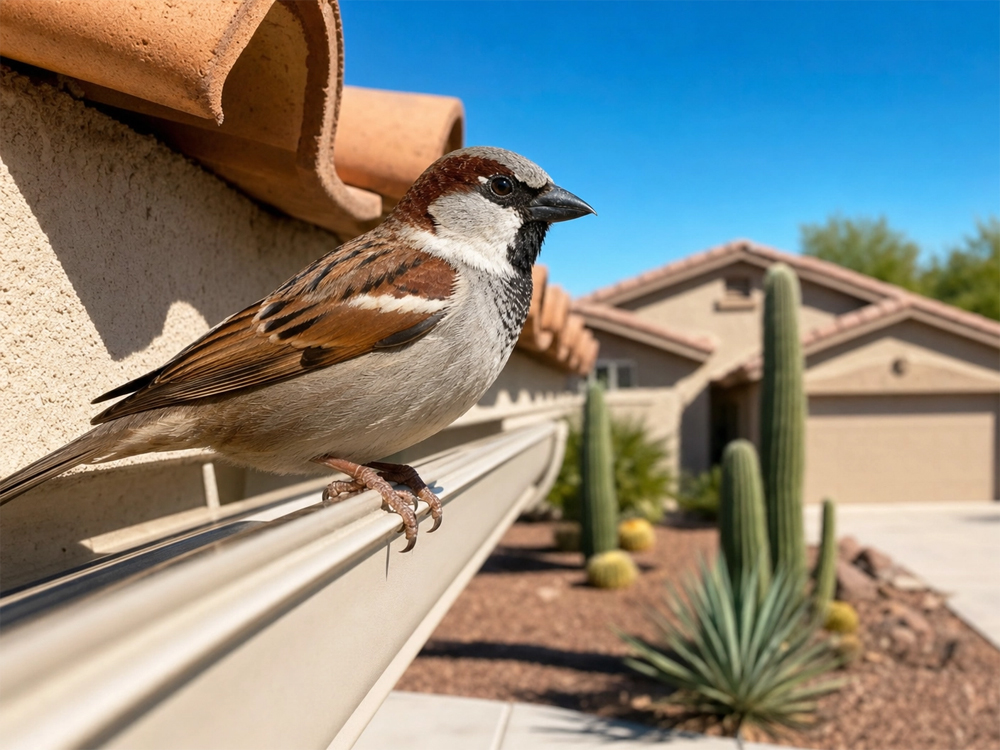
The house sparrow is another invasive species that has become a widespread pest across the Valley. Measuring about five to six inches in length, males feature a gray crown, white cheeks, and a distinct black bib on their throat and chest, while females are a plainer, dusty brown. They are highly adaptable and are drawn to urban environments where they can easily scavenge for crumbs, seeds, and insects. They frequently build their messy, intricate nests in gutters, behind signs, and inside the architectural crevices of homes and businesses.
Despite their small size, house sparrows are incredibly aggressive and territorial, often destroying the nests and eggs of native songbirds. They are considered pests because their nesting materials can clog gutters and drainage systems, leading to water backups and roof damage. In commercial settings, they often find their way inside warehouses and food processing facilities, where their droppings contaminate products and violate health codes. They are also known carriers of over 25 diseases and various parasites.
Prevention involves a combination of habitat modification and physical barriers. Ensure that outdoor dining areas are kept clean of food debris and that commercial dumpsters are securely closed. To effectively get rid of house sparrows, professional exclusion is the most reliable strategy. We install specialized, small-mesh bird netting to completely seal off potential nesting areas, and use specialized repellents and deterrents to keep them away from ledges and signs without harming the birds.
Gila Woodpeckers in Phoenix Arizona
Gila Woodpeckers: The Drumming Nuisance
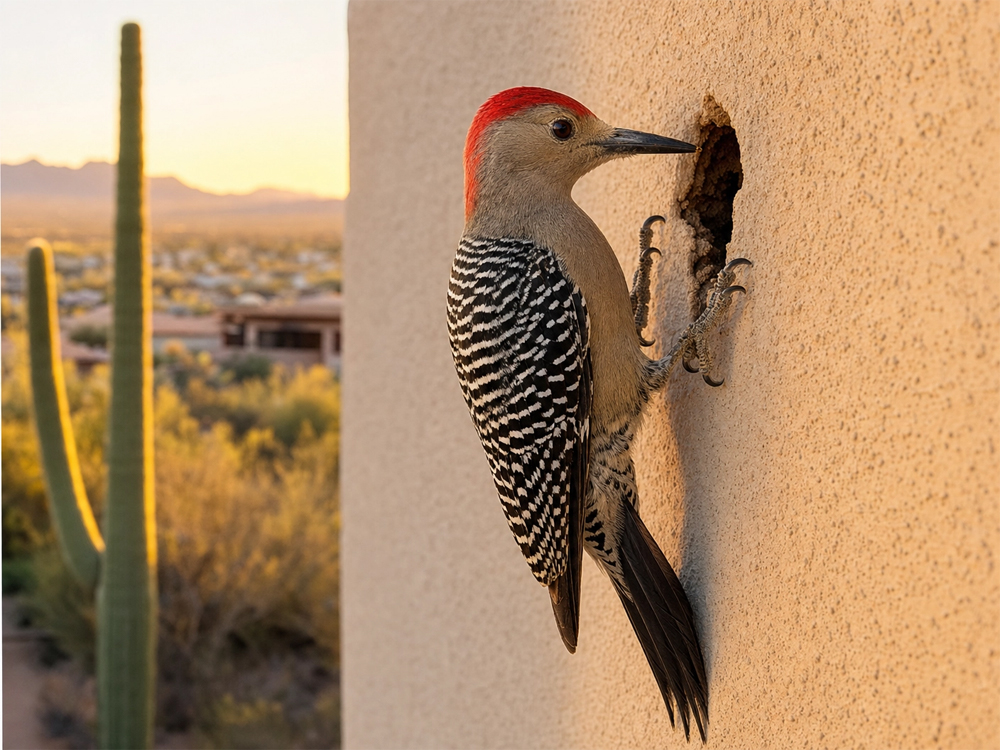
Native to the Sonoran Desert, the Gila woodpecker is easily identifiable by its zebra-striped back, brown face, and the bright red cap of feathers on the heads of adult males. While they naturally nest in saguaro cacti, they have adapted to modern homes. They are attracted to houses with stucco exteriors, foam backing, or wood siding, which they find ideal for excavating nesting cavities. They also use metal chimney caps and exhaust vents as sounding boards, drumming loudly to attract mates and establish territory.
Woodpeckers become pests when they decide your home is their new territory. The drumming can be an infuriating wake-up call, but the real issue is property damage. They can drill fist-sized holes into the side of your home in a very short period. These holes not only damage the aesthetic and structural integrity of the building but also create entry points for other pests, such as bees, smaller birds, and moisture, leading to secondary infestations and costly repairs.
Because Gila woodpeckers are native and federally protected under the Migratory Bird Treaty Act, they cannot be legally harmed or killed. Prevention and control must rely on humane deterrents. As soon as damage appears, the holes must be promptly repaired, textured, and painted. To persuade them to leave, we utilize a combination of visual scare devices, such as flashers and reflective deterrents, alongside tactile repellents like specialized optical gels placed near their target areas to make them uncomfortable and encourage them to move on.
Great-Tailed Grackles in Phoenix Arizona
Great-Tailed Grackles and Nuisance Swallows
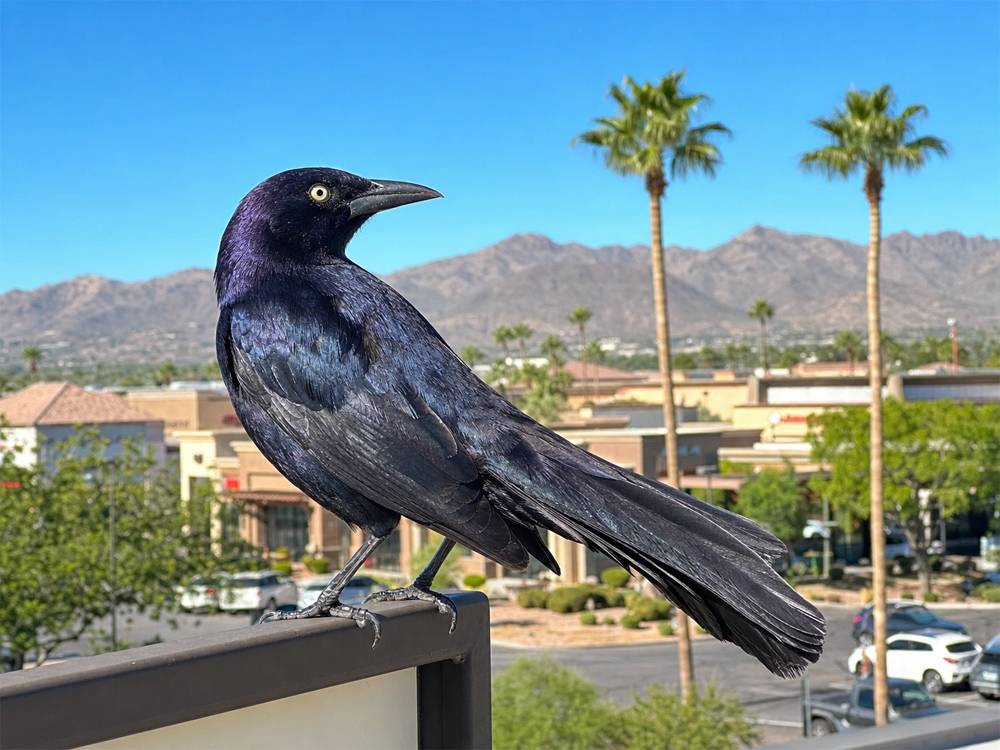
The Great-Tailed Grackle is a large, conspicuous blackbird. Males boast shiny, iridescent purple-black feathers and a massive, keel-shaped tail, while females are smaller and golden-brown. They are highly social, noisy, and omnivorous, drawn to parking lots, dumpsters, and outdoor food courts. Their massive flocks create unsanitary conditions with their droppings and deafening noise. Controlling grackles involves strict sanitation, removing food sources, and using professional deterrents like electric tracks on ledges to prevent roosting.
Swallows, specifically Cliff and Barn Swallows, are sleek, migratory birds that arrive in Arizona during the spring. They are attracted to the eaves and overhangs of homes and bridges, where they build their intricate nests out of mud pellets. While they are beneficial insect eaters, they become pests when they build large colonies on residential or commercial buildings, creating unsightly mud nests and dropping large amounts of feces.
Like woodpeckers, swallows are federally protected, meaning active nests containing eggs or young cannot be disturbed. Prevention is key: old nests must be washed away before the birds return from migration, and physical barriers like Bird Slope or smooth plastic sheeting should be installed under eaves to prevent the mud from adhering. Once they arrive, frequent washing of the area before a nest is fully constructed can discourage them from settling.
Affordable Relief from any size Bird or Pigeon Problem
Permanent Relief is Just a Phone Call Away
Our comprehensive approach begins with a thorough evaluation by an experienced technician. We identify the specific attractants on your property—whether it is water sources, shelter opportunities, or food availability—and design a targeted exclusion plan. We never rely on temporary fixes or inhumane poisons. Before any deterrents are installed, the area must be thoroughly cleaned and disinfected using specialized enzymatic cleaners to remove tracking pheromones that attract new flocks.
Most services include a renewable warranty so our customers can have peace of mind knowing that if the pest birds come back, we come back.
 Got Pest Birds Phoenix Arizona?
Do not let a feral bird problem damage your investment or threaten your health. Contact our friendly, local team today to schedule your hassle-free quote, a free inspection, a second opinion, or a comprehensive free evaluation.
Proudly serving homeowners and businesses throughout Metropolitan Phoenix, Arizona.