
Why You Shouldn’t Feed Pigeons: Health, Legal, & Structural Realities in Phoenix AZ
Dropping a handful of breadcrumbs for feral birds in your local park might seem like a compassionate, harmless connection with nature. However, this well-intentioned act triggers a devastating cascade of public health hazards, corrosive property damage, and legal penalties across the Valley of the Sun.
At Pigeon Control Phoenix, we believe deeply in education, humane management, and environmental responsibility. As a family-owned business with three generations of local expertise, we have spent over 30 years witnessing the severe ecological and structural damage caused by artificial feeding. What many well-meaning residents do not realize is that understanding why you shouldn’t feed pigeons is critical for community safety, bird welfare, and legal compliance. In fact, feeding these feral birds is strictly prohibited by municipal ordinances throughout the Phoenix metropolitan area, with civil and criminal fines reaching up to $2,500 for non-compliance.
Our team has been recognized as a 12-Year Award Winner for outstanding bird exclusion and sanitation services across Arizona. We have developed this comprehensive, expert-led guide to explain the hidden dangers of feeding wild flocks, the specific municipal laws governing Metropolitan Phoenix, the biological impact of human food on bird health, and how to resolve feeding disputes with neighbors.
The Hidden Dangers: Why You Shouldn’t Feed Pigeons
Severe Public Health Risks to Your Family and Pets
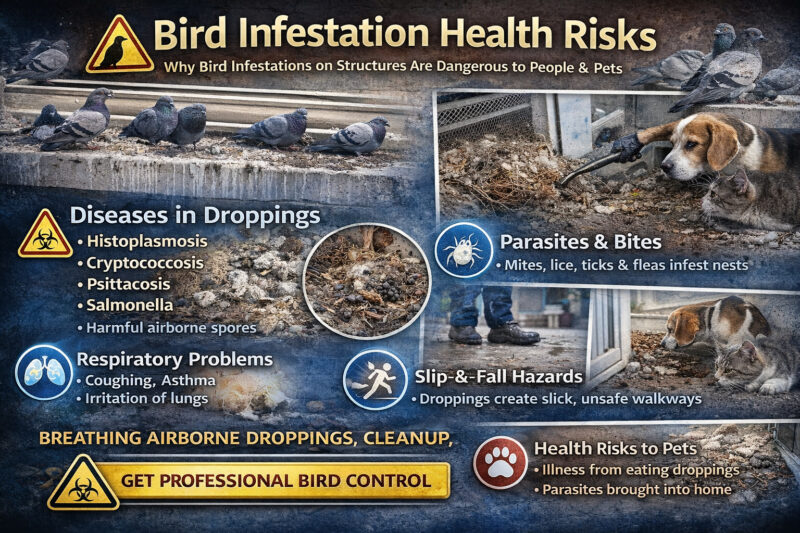
The primary concern surrounding artificial feeding is the rapid accumulation of biological hazards. When feral birds congregate in high numbers at feeding sites, they deposit massive quantities of droppings, nesting debris, and dander. Dried droppings break down into microscopic dust that becomes airborne, carrying infectious fungal spores and bacteria directly into residential ventilation systems.
Inhaling these airborne particles exposes humans to dangerous respiratory illnesses, including Histoplasmosis, Cryptococcosis, and Psittacosis (often called parrot fever). These infections trigger severe, flu-like symptoms, high fevers, and acute pneumonia, which can be life-threatening for children, elderly individuals, and immunocompromised neighbors. Additionally, crowded feeding areas attract disease-carrying parasites, including northern fowl mites, bird ticks, and pigeon fleas, which readily migrate into nearby homes and bite both humans and household pets.
Corrosive Property Damage and Astronomical Repair Costs
Feral bird droppings are highly acidic, featuring a concentrated pH level of 3.0 to 4.5 due to the presence of uric acid. This corrosive substance acts like a chemical solvent, slowly eating through clay roof tiles, asphalt shingles, exterior paint, commercial metal awnings, and expensive residential solar panel arrays.
When well-meaning residents feed local flocks, they invite these birds to roost permanently on nearby roofs. The resulting buildup of nesting materials and waste blocks critical roof valleys, gutters, and drainage downpipes. During Arizona’s intense summer monsoon storms, these blockages prevent rainwater from draining, leading to severe roof leaks, collapsed gutter systems, and structural wood rot that costs property owners thousands of dollars to repair.
Secondary Pest Infestations and Neighborhood Nuisances
Leftover breadcrumbs, seeds, and food scraps left on lawns or pavements rarely go to waste—but they do not just feed birds. Unconsumed food debris acts as a powerful attractant for secondary urban pests, including roof rats, sewer mice, German cockroaches, and aggressive stinging ants.
By establishing a daily feeding station, residents inadvertently create a localized breeding ground for rodents and insects, compounding the sanitation crisis for the entire neighborhood. Furthermore, the intense, foul odors of accumulated waste and the persistent, loud cooing of hundreds of birds can quickly render outdoor patios, pools, and backyard spaces completely unusable.
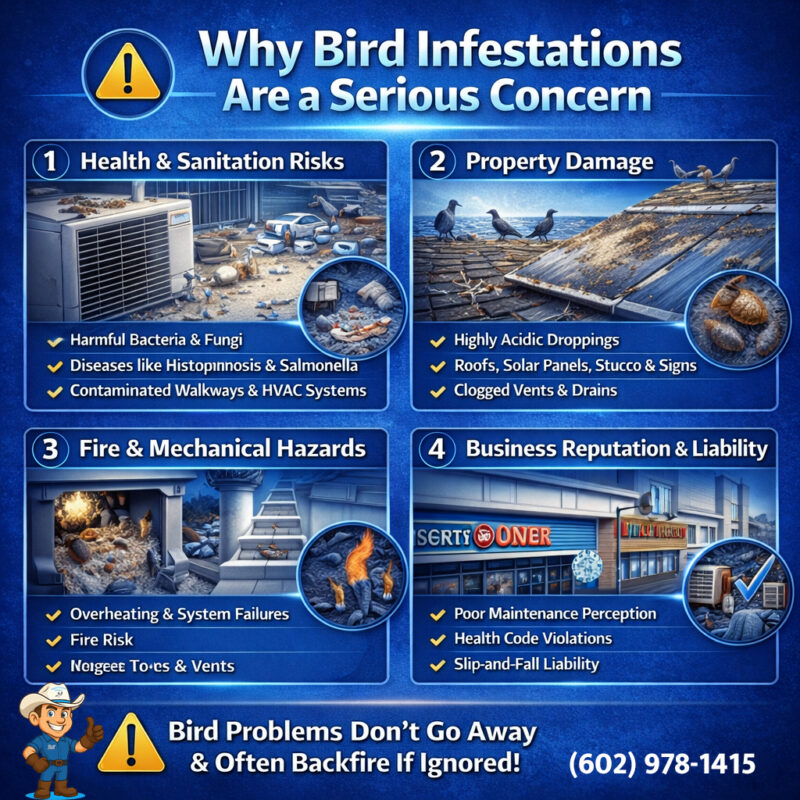
Accumulated bird droppings contain highly corrosive uric acid that damages concrete tiles and solar panels, requiring professional cleanup and commercial-grade exclusion barriers.
Legal Consequences: Phoenix Area Laws and Ordinances
Arizona State Law and Municipal Jurisdictions
While Arizona State Law (specifically ARS § 13-2927) prohibits the feeding of certain wildlife in large counties like Maricopa, it explicitly exempts wild birds from state-level prosecution. Because of this legislative carve-out, individual municipalities across the Metropolitan Phoenix area have taken independent responsibility for regulating bird feeding through local municipal codes and public nuisance laws.
This localized approach has created a strict regulatory framework across the Valley, with major cities implementing specific ordinances to penalize individuals who feed feral birds on public or private properties.
City-by-City Legal Breakdown
The legal consequences of feeding wild birds vary significantly depending on which city you reside in. Below is an authoritative breakdown of the active municipal ordinances across the Phoenix metropolitan area:
- City of Phoenix: Under Phoenix City Code, feeding wild birds is classified as a public nuisance and a class 1 misdemeanor on both public and private property. Fines for persistent violations can reach up to $2,500, with potential probation or jail time for repeat offenders. Enforcement typically requires formal complaints from multiple households, after which code compliance officers will conduct inspections and issue citations.
- City of Mesa: Mesa maintains a strict ordinance (Mesa City Code Title 6) that completely bans the feeding of feral birds and doves on all public and private properties. Mesa provides a specific exemption allowing residents to feed songbirds, provided they use specialized, pigeon-proof feeders suspended off the ground that prevent larger pest species from accessing the seed. Violations carry civil penalties of several hundred dollars.
- City of Scottsdale: Scottsdale focuses its municipal bans primarily on public parks, plazas, and recreational areas. Feeding wild waterfowl or feral birds in Scottsdale public spaces carries fines of up to $750. While there is no explicit citywide ban on private residential feeding, local Homeowners Associations (HOAs) and apartment complexes maintain strict, legally binding CC&Rs that levy heavy private fines against residents who attract flocks.
- City of Glendale: Glendale City Code prohibits feeding wild birds on all public property, including city-owned parking lots, parks, and sidewalks, with fines ranging from $50 to $150 per occurrence. The city has actively debated expanding this prohibition to cover private residential properties due to the rise in community health complaints.
- City of Tempe: Tempe regulates bird feeding under its comprehensive public nuisance and sanitation codes. It is illegal to feed wild flocks in any manner that causes an accumulation of waste, attracts rodents, or creates a localized public health hazard. Code enforcement officers actively investigate neighbor complaints, issuing warnings followed by formal citations.
- City of Surprise: Surprise enacted a municipal ordinance specifically banning the feeding of wild animals and feral birds on all city-owned properties, including parks, preserves, and municipal buildings. While private properties are currently exempt from the ban, any feeding that results in a documented rodent infestation or severe odor can be prosecuted under general health and safety codes.
| City / Municipality | Public Property Rules | Private Property Rules | Maximum Fine Limit | Special Enforcement Notes |
|---|---|---|---|---|
| Phoenix | Prohibited | Prohibited | $2,500 | Requires verified complaints from multiple households. Class 1 misdemeanor. |
| Mesa | Prohibited | Prohibited | Several Hundred | Allows suspended, specialized pigeon-proof songbird feeders only. |
| Scottsdale | Prohibited | HOA Restricted | $750 | Public park bans are strictly enforced; residential areas regulated by HOAs. |
| Glendale | Prohibited | Allowed (Under Review) | $150 | Applies to all public lots and sidewalks; private bans are under city council review. |
| Tempe | Prohibited | Prohibited | Nuisance Fines | Enforced under public health, sanitation, and environmental nuisance codes. |
| Surprise | Prohibited | Allowed | Nuisance Fines | Covers all city-owned properties; private properties subject to rodent codes. |
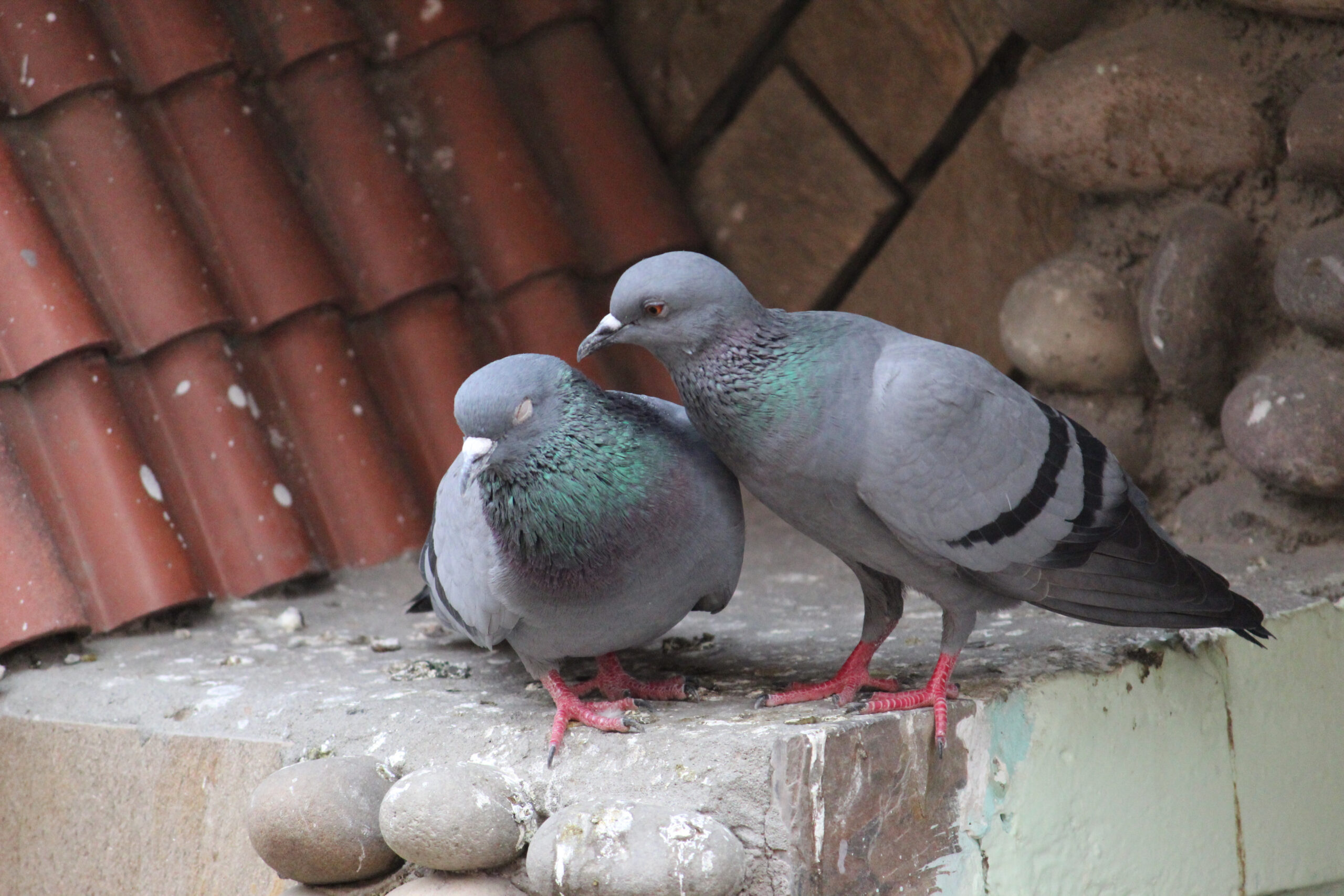
Once a flock associates a residential property with a daily food source, they will roost permanently on clay roof tiles, causing extensive structural wear.
Understanding Natural Pigeon Behavior and Diet
What Feral Birds Naturally Consume in the Wild
To comprehend the ecological damage caused by artificial feeding, it is vital to examine their natural biology. Pigeons are primarily granivorous, meaning their bodies are biologically engineered to digest a diverse, balanced diet of wild seeds, grains, berries, and small plants. In a balanced ecosystem, these birds spend up to 90% of their waking hours foraging across natural desert terrains and agricultural fields.
This active foraging behavior is crucial for their physical health. It provides natural exercise, maintains healthy bone density, and regulates their reproductive cycles. In nature, seasonal food scarcity acts as a natural population brake, ensuring that flocks never grow larger than the local environment can naturally sustain.
How Human Handouts Cripple Natural Survival Instincts
When humans introduce a consistent, concentrated source of artificial food, it fundamentally cripples the birds’ natural survival instincts. Pigeons are highly opportunistic scavengers. Once they realize that a specific park bench, backyard lawn, or parking lot provides an effortless, daily feast, they immediately abandon their natural foraging behaviors.
Instead of flying miles to forage, they spend their days loafing on nearby rooflines, eaves, and power lines, waiting for the feeding party to arrive. This extreme sedentariness leads to rapid muscle atrophy, severe obesity, and a complete loss of their natural wariness toward urban predators and vehicular traffic. Over time, these birds become entirely dependent on human handouts, losing the ability to survive independently.
The Hidden Cruelty: Why Human Food is Toxic to Birds
Many well-meaning individuals feed birds out of a deep love for animals, believing they are helping them survive. However, the food items typically offered—such as white bread, crackers, popcorn, chips, and processed pastries—are biologically toxic to their systems. These highly processed human foods are packed with refined carbohydrates, sodium, sugars, and artificial preservatives, while completely lacking the essential proteins, calcium, vitamins, and minerals that birds require.
Feeding birds a steady diet of bread causes severe, irreversible metabolic bone diseases. In young chicks, this extreme calcium deficiency triggers a devastating physical deformity known as “Angel Wing.” This condition causes the wing joints to twist outward during growth, permanently stripping the bird of its ability to fly, forage, or escape predators. Furthermore, high-sodium snacks cause acute kidney failure, digestive tract blockages, and severe malnutrition, leading to a slow, painful death. In reality, feeding pigeons is not an act of kindness—it is a form of unintentional ecological cruelty.
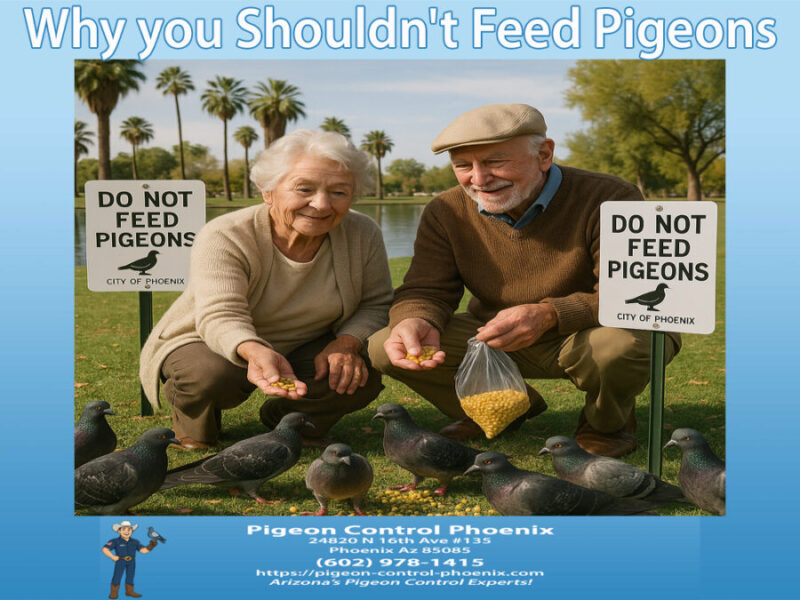
Why you Shouldn’t Feed Pigeons | Pigeon Control Phoenix Az
Can You Report Neighbors for Feeding Pigeons?
Step-by-Step Guide to Documenting Feeding Violations
If your property is being overrun by feral birds due to a neighbor’s persistent feeding habits, you do not have to suffer in silence. You have clear legal recourses across the Phoenix metropolitan area. However, municipal code enforcement officers cannot act on hearsay alone; you must build a structured, undeniable case of code violation.
Begin by systematically documenting the feeding activity. Use your phone to capture clear, high-definition photographs or video recordings of the neighbor actively distributing food, the birds congregating on their property, and the resulting damage on your own home (such as droppings corroding your roof tiles or solar panels). Maintain a detailed, written log noting the exact dates, times, and estimated flock sizes. This physical evidence is crucial for city officials to verify the violation.
How to File a Formal Complaint with Code Enforcement
Once you have gathered sufficient documentation, file a formal complaint with your local city’s Code Enforcement or Code Compliance Department. Do not call the local police department, as bird feeding is a municipal code and public health violation rather than a criminal emergency.
Most Valley cities—including Phoenix, Mesa, and Scottsdale—provide convenient online portals where you can submit code violation reports, upload photo evidence, and track the status of your case. If you reside in Phoenix, remember that the city ordinance typically requires complaints from multiple separate households in the immediate vicinity before an active investigation is launched, so coordinating with other affected neighbors is highly recommended.
Navigating Community Conflict Resolution and HOAs
Before initiating a formal municipal investigation, we always recommend attempting a polite, direct conversation with your neighbor. In many cases, residents are completely unaware of the local ordinances, the health risks of bird droppings, or the structural damage occurring on your roof. Approach them calmly, explain the situation, and share this educational guide.
If direct communication fails, or if you live in a master-planned community, contact your Homeowners Association (HOA) board. HOAs maintain strict CC&Rs regarding property maintenance, cleanliness, and animal feeding. HOA boards can issue immediate warnings, levy private fines, and enforce property cleanup much faster than city code enforcement agencies, providing an efficient path to resolution.
Professional solar panel bird screening physically blocks pest birds from nesting underneath, protecting your solar investment and roof integrity.
Professional Pigeon Control Solutions
When is It Time to Call in the Experts?
If you observe a consistent flock of more than 10 to 15 birds roosting on your roofline, nesting under your solar panels, or gathering in your yard, the infestation has progressed beyond the reach of basic retail bird spikes or plastic owls. Pigeons are creatures of extreme habit; once they establish a nesting site and deposit their pheromone-rich waste, they will fight aggressively to return to that exact location.
Attempting to resolve a major infestation through DIY methods is not only highly ineffective, but it is also exceptionally dangerous. Climbing onto steep concrete tile roofs in the blistering Arizona heat carries a high risk of devastating falls and severe heat exhaustion. Furthermore, untrained homeowners walking on clay roof tiles can easily crack or shatter dozens of tiles, leading to catastrophic roof leaks during the next monsoon season.
Our Industry-Leading Valley-Wide Services
Pigeon Control Phoenix offers a comprehensive, multi-step eradication and exclusion program designed specifically for the unique architectural challenges of desert homes:
- Comprehensive Property Evaluation: Our highly trained technicians conduct a thorough inspection of your roof, solar arrays, eaves, and commercial structures to identify active nesting zones, entry points, and flock behavioral patterns.
- Humane Population Management: We utilize state-regulated, humane trapping and removal protocols to safely reduce active flock sizes on your property.
- Medical-Grade Sanitation and Cleanup: We safely scrape and remove all toxic droppings, carcass accumulations, and nesting debris. We then apply EPA-registered, medical-grade biocides to kill all bacteria, fungi, and viruses on contact, followed by high-pressure washing and pheromone-neutralizing sanitizers to eliminate the scent markers that attract new birds.
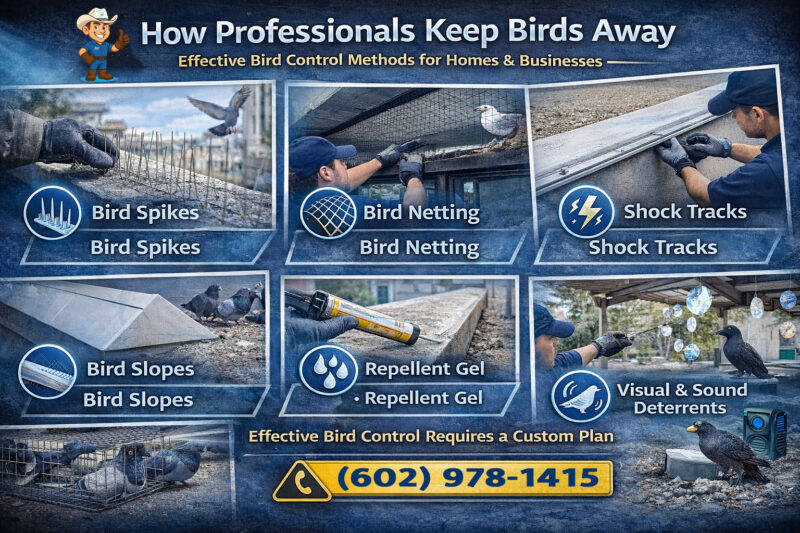
- Commercial-Grade Physical Exclusion: We install heavy-duty, UV-stabilized galvanized steel mesh barriers, stainless steel spike systems, and non-penetrating solar panel bird guards designed to withstand decades of harsh Arizona sun.
We stand completely behind the quality of our craftsmanship. This is why most services include a renewable warranty so our customers can have peace of mind knowing that if the pest birds come back, we come back.

Pigeon Control Phoenix Family Owned and Locally Operated
Supporting Our Local Arizona Community
We believe deeply in supporting the communities we serve. When you choose a local company, your money stays right here at home. It helps create local jobs, supports families, and keeps paychecks circulating through our community. You’re also strengthening the local tax base that funds schools, parks, and public services — while helping small businesses grow, sponsor local events, and keep our neighborhoods thriving.

Professional-grade, UV-stabilized stainless steel spikes physically prevent birds from roosting on ledges, eaves, and architectural trim.
Frequently Asked Questions
Is it illegal to feed pigeons in Phoenix AZ?
Yes, feeding wild pigeons is strictly illegal within the City of Phoenix. Under local municipal codes, feeding these birds on public or private property is classified as a public nuisance and a class 1 misdemeanor, which can carry civil and criminal fines of up to $2,500. Code compliance officers actively enforce this ban based on formal complaints filed by local residents.
Can my HOA fine me for feeding birds in Scottsdale?
Yes, your Homeowners Association can legally fine you for feeding birds in Scottsdale. While Scottsdale municipal codes primarily restrict bird feeding in public parks and plazas, almost all residential HOAs in Scottsdale maintain strict, legally binding CC&Rs that prohibit attracting feral bird flocks due to property damage and sanitation risks. These associations can levy immediate private fines and require you to clean up any resulting mess.
Why is bread harmful to wild pigeons?
No, white bread is not a safe or healthy food source for wild birds. Bread, crackers, and chips are highly processed foods that completely lack the essential proteins, vitamins, and minerals that birds need for proper biological development. Feeding birds these empty carbohydrates leads to severe malnutrition, bone disease, and a crippling physical deformity called “Angel Wing” that permanently strips young birds of their ability to fly and survive.
How do I report a neighbor who is feeding pigeons in Mesa AZ?
Yes, you can report a neighbor for feeding birds in Mesa by filing a complaint with Mesa Code Compliance. Mesa City Code Title 6 strictly prohibits the feeding of feral birds on both public and private properties. You should document the feeding activity with photos and videos, note the dates and times in a log, and submit a formal code violation report through Mesa’s online municipal portal or by calling their code compliance hotline.
Do plastic owls or scare tape work to keep pigeons away?
No, plastic decoy owls, rubber snakes, and reflective scare tape do not provide a permanent solution for bird control. Pigeons are highly intelligent and adaptable birds that quickly recognize static decoys as non-threatening. Within a few days, the flock will ignore these visual deterrents and return to roost directly next to them. Only professional, physical exclusion barriers—such as steel mesh screening and heavy-duty spikes—will permanently keep them off your roof.

Take Action: Reclaim Your Home from Feral Flocks Today
Understanding why you shouldn’t feed pigeons is the first step toward restoring safety, cleanliness, and peace of mind to your property. If a neighbor’s feeding habits or a local nesting site has brought an unwanted flock to your roof, do not wait for corrosive uric acid to destroy your concrete tiles or solar arrays. Contact the licensed, multi-generation experts at Pigeon Control Phoenix today for a professional evaluation and permanent, commercial-grade exclusion solutions.
Pigeon Control Phoenix Resources & Valley Service Areas
Our Core Services:
Valley-Wide Service Guides:
Local City Landing Pages: